Choosing Your First Handgun
Walking into a gun store for the first time can feel like standing at the base of a mountain. Rows of pistols in a dozen calibers, price tags ranging from a few hundred dollars to well over a thousand, and everyone around you seems to already know exactly what they want. Choosing your first handgun does not have to be complicated. It comes down to three things, in this order: fit, caliber, and budget.
Start With Fit, Not Firepower
The best handgun on paper is the wrong handgun if it does not sit comfortably in your hand. Fit affects everything downstream: how accurately you shoot, how quickly you recover between shots, and whether you will actually want to practice with it. A gun that fits well feels like an extension of your hand rather than something you are wrestling with.
Grip Size and Hand Shape
Wrap your hand around the grip and check the reach to the trigger. Your finger should land on the trigger with the pad, not the first knuckle, and you should be able to depress it straight back without shifting your grip. Many modern pistols come with interchangeable backstraps for this exact reason.
Weight and Balance
A heavier handgun absorbs more recoil, which can make it easier to shoot accurately, but it is also more to carry or hold up during a long range session. A lighter gun is easier to manage day to day but transmits more felt recoil. Neither is objectively better. It depends on how and where you plan to use it.
Finding the Right Caliber
Caliber debates can get loud, but for a first handgun the practical differences matter more than the internet arguments.
9mm: The Practical Default
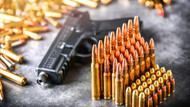
Nine millimeter ammunition is widely available, generally the most affordable centerfire pistol round, and manageable for most shooters in terms of recoil. Modern defensive ammunition has closed much of the performance gap that once separated 9mm from larger rounds, which is why it has become the standard choice for both new and experienced shooters.
.380 ACP and Other Compact Options
Smaller calibers like .380 ACP typically come in smaller, lighter guns, which can make them easier to conceal or easier for shooters with smaller hands or less grip strength. The tradeoff is a smaller platform that can be harder to shoot accurately for beginners, since less mass means more felt recoil relative to the gun's size.
.45 ACP and Larger Calibers
Larger calibers deliver more energy per shot but come with more recoil, heavier guns, and pricier ammunition. Unless you have a specific reason to want one, most new shooters are better served starting with something in the 9mm range and working up from there if they choose to.
Setting a Realistic Budget
Your budget should cover more than the gun itself. Plan for a holster if you intend to carry, a case or safe for storage, cleaning supplies, and enough ammunition to actually practice with. A quality entry level pistol paired with proper gear and range time will serve you better than a premium gun you rarely shoot because there is nothing left over for ammunition.
Revolver or Semiautomatic?
Semiautomatic pistols dominate the market for good reason: higher capacity, faster reloads, and a huge selection of models and accessories. Revolvers offer simplicity, fewer moving parts to learn, and a design that is easy to understand at a glance. For most first time buyers focused on target shooting or home defense, a semiautomatic is the more practical and versatile choice, but a revolver is a legitimate option if simplicity is your priority.
Try Before You Buy
Specs on a page cannot tell you how a gun feels in your hand or how it shoots for you specifically. Renting a few different models before committing to a purchase is the single best way to avoid buyer's remorse. Pay attention to how the sights line up naturally, how the trigger breaks, and how quickly you can get back on target after a shot.
Bringing It Home
Once you have narrowed down fit, caliber, and budget, the decision usually becomes clear. Stop by Tin Star Shooting Range to handle a range of options in person, ask questions, and get guidance suited to how you actually plan to use your first handgun.